
Service
Garage Door Maintenance for Clawson Homes
Clawson's 1938-1984 housing and cold winters wear specific parts first. See what maintenance actually catches before a spring, cable, or opener fails on you.
- Licensed & Insured
- Same-Area Service Calls
- Upfront Pricing
Why This Fails Locally
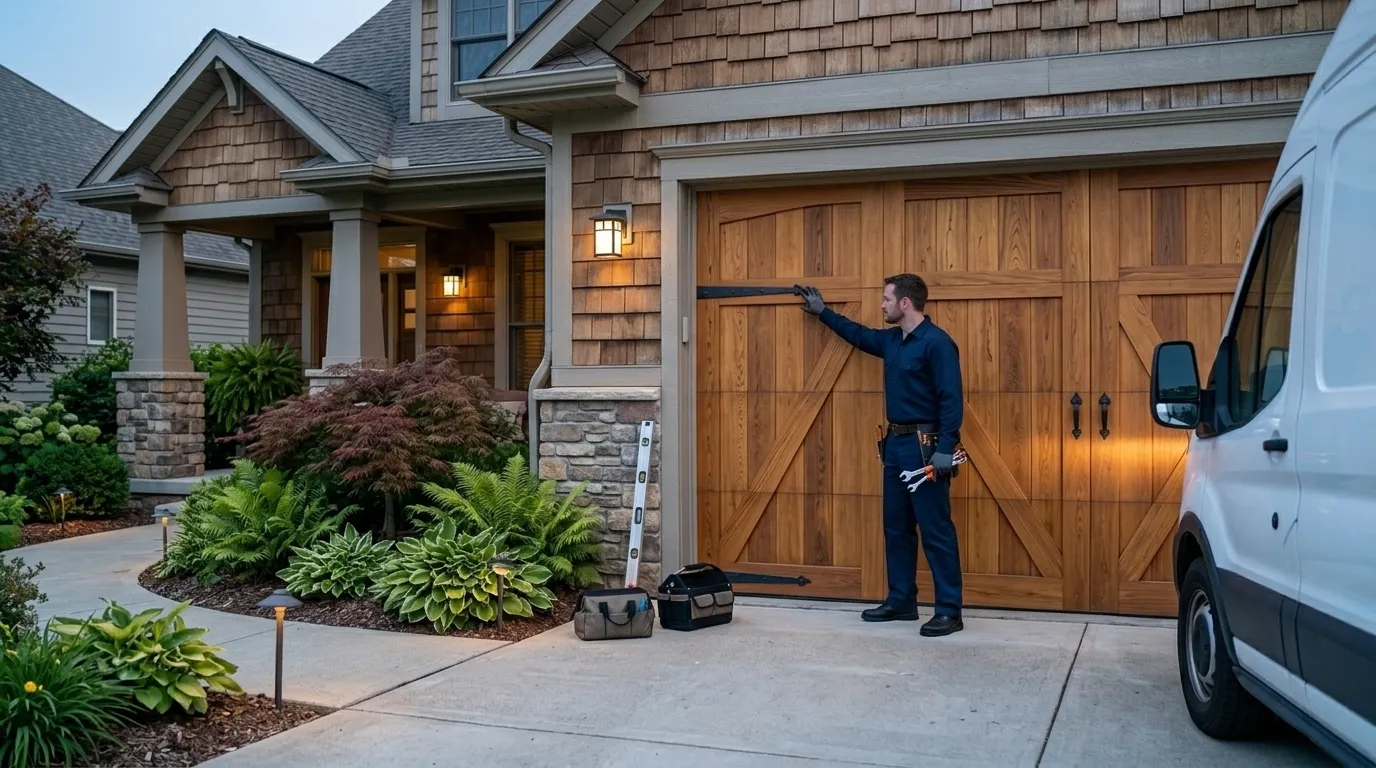
Most houses on this side of the service area went up between 1938 and 1984, with the median build year sitting at 1958. That means original torsion springs, steel tracks, and openers that have already outlived their design life in a lot of these garages, even where a homeowner has replaced the door skin itself. Twenty-five named areas around here share this same pre-1960-heavy stock, so the failure pattern repeats block to block: hardware sized for a lighter door, lubrication that dried out decades ago, and rollers that were never swapped when the bearings went.
Add a cold-severe climate band on top of that and you get a second problem layered on the first. Steel contracts in deep cold, torsion springs lose tension faster in the cold months, and door panels that seat fine in July can bind or drag once temperatures drop. A garage that never gets checked will usually show its first real symptom in winter, not because the door is new to failing, but because cold is what finally exposes wear that summer never tested.
Maintenance here isn't cosmetic. It's catching a spring that's lost 20% of its tension before it snaps under a cold-morning cycle, or a track bracket that's worked loose over sixty-plus years of thermal movement. None of that shows up until the day it doesn't work at all.
What You Pay
We don't have a flat number to hand you here, because what a maintenance visit costs depends on what's actually installed - a door from 1958 with original hardware is a different job than a 2005 opener with a worn logic board. What we can tell you is what changes the bill: door age, whether the opener needs adjustment or replacement parts, and how many corrective items turn up once we're inspecting versus just checking and lubricating.
Household income across this service area runs a median of $99,286, and most of the housing stock is owner-occupied - that matters because a lot of these are long-term owners maintaining a house they plan to keep, not flippers doing the minimum. That usually means the smarter call is a real inspection rather than a quick oil-and-go, since the parts most likely to be original here (springs, cables, track brackets) are also the parts most expensive to replace after they fail instead of before.
We won't quote a number without seeing the door. Anyone who does, on a house built before torsion spring sizing was standardized the way it is now, is guessing.
The DIY Question
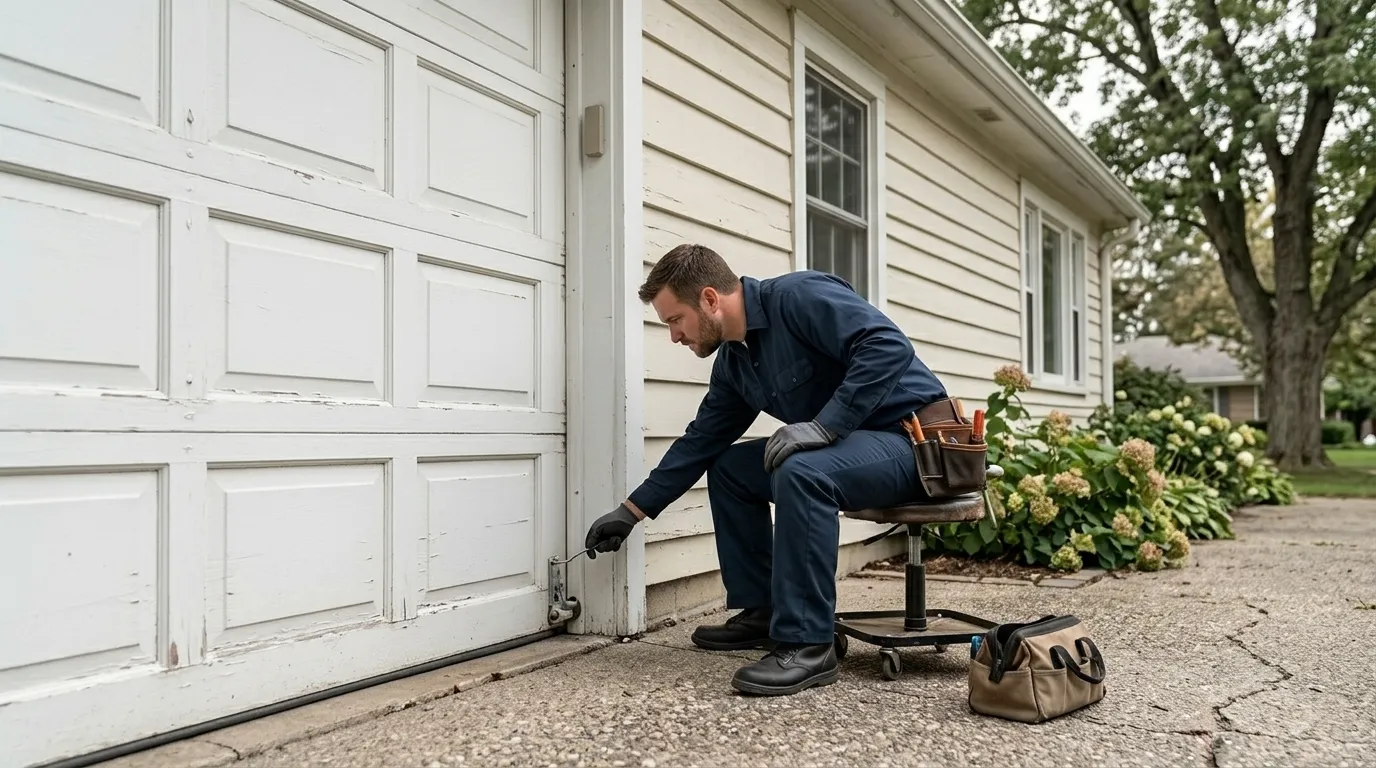
There's real maintenance a homeowner can do without a truck showing up: wipe down and lubricate rollers and hinges, check that the auto-reverse safety feature still works, tighten visible bolts on the track, and clear the tracks of debris. None of that requires touching the spring system.
What you shouldn't do yourself is anything involving the torsion spring - adjusting tension, removing it, or working near it while it's under load. On a door this old, that spring has been holding several hundred pounds of tension for decades, often without ever being serviced.
That's not a caution we're adding for liability. Torsion springs under tension are the single most common cause of serious garage injuries, and a spring that's original to a 1958 build is not one you want to learn on.
The honest limitation: we can't tell you over the phone whether your specific door is a DIY-safe job or not. A door with a worn cable but a good spring is a different risk than one where both are original. If you're not sure which parts you're looking at, that uncertainty itself is the reason to have someone look before you touch anything load-bearing.
What You Are Seeing
A door that's noticeably harder to lift by hand than it used to be is almost always a spring losing tension, not a track problem. If it slams down instead of settling, or one side drops faster than the other, that's often a cable stretching unevenly or a spring on one side of a double door failing while the other holds. A door that reverses on its own partway up is usually the opener's force setting compensating for added resistance somewhere in the system - which means something else is already wearing.
Rust streaks on the track, especially after a hard winter, point to moisture getting into places it shouldn't on older galvanized track that's lost its coating. Grinding or popping sounds when the door moves usually trace back to worn rollers, not the opener itself, even though the opener is what people blame first.
Across the roughly 35,443 owner-occupied houses in this service area, the pattern holds: the door itself often looks fine, and the failure is happening in the hardware you don't see from the driveway. That's the case for scheduled maintenance instead of waiting for a symptom you can't ignore.
Jobs Like Yours
Recent work from this service line.
Talk to a Technician Before You Book
Describe what the door is doing and get a straight answer on what it likely needs.
Why Clawson Calls Us
What Happens When You Call
-
1
Call or Request a Quote
Tell us what the door is doing and roughly how old the house is - that alone points us toward the likely part before a truck leaves.
-
2
On-Site Diagnosis
A tech checks the spring, cables, tracks, and opener in person and tells you plainly what is actually wrong.
-
3
Straight Price, No Surprises
You get a number before any work starts. It covers parts and labor, nothing added after the fact.
-
4
Fixed the Same Visit
Most repairs are done in one trip. If a part needs sourcing, we tell you that upfront instead of guessing.
Frequently Asked Questions
How often should I get my garage door serviced in Clawson?
For a door on original or older hardware - common in this area given the 1938-1984 housing stock - once a year before winter is the reasonable minimum. Cold-severe winters are when tension loss and hardware wear actually show up as failures, so catching it in fall gives you a buffer before the temperature drop makes things worse.
Can maintenance fix a door that's already making noise?
Sometimes. If the noise is worn rollers or a loosening track bracket, a maintenance visit catches it before it becomes a stuck or dropped door. If the noise is a spring already failing, maintenance turns into a repair call instead - but you'll know which one you're dealing with once someone's actually looked at it.
Is it worth maintaining an opener from the 1990s or older?
Depends on the part. Lubrication, force adjustment, and safety sensor checks are worth doing on any opener. But if the logic board or motor is failing, no amount of maintenance fixes that - at some point replacement is the honest answer, and we'll tell you when you're at that point rather than keep billing small fixes.
Need Garage Door Maintenance for Clawson Homes?
Call now for straight answers on cost and timing.