
Clawson Garage Door Guide
What That Sound From Your Garage Door Is Trying to Tell You
Clawson homes mostly date to 1958 and sit in a severe-cold band. Here's what grinding, popping, and banging garage doors are telling you, season by season.
- Licensed & Insured
- Same-Area Service Calls
- Upfront Pricing
What Is Going On
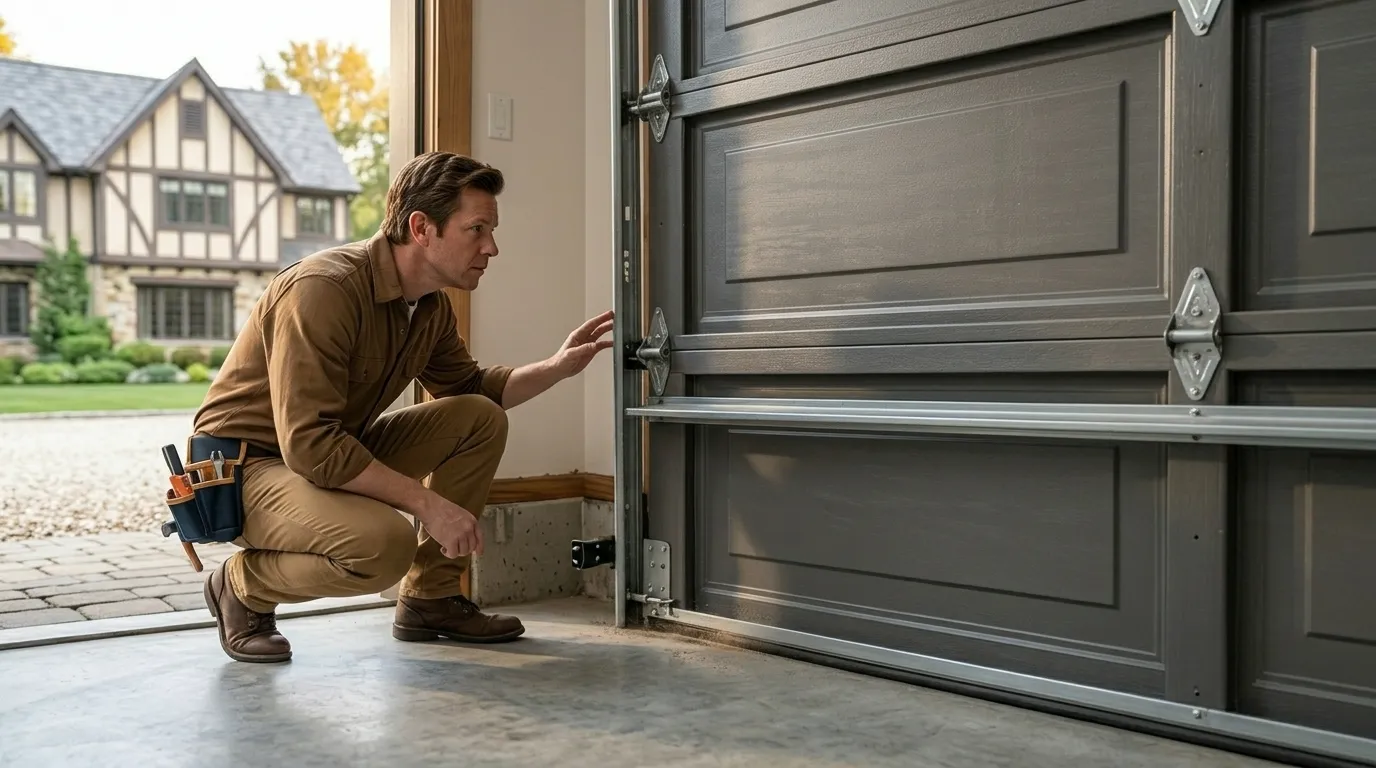
Most of the housing stock in Clawson went up between 1938 and 1984, with the median build year landing around 1958. That matters more than people think, because a door and opener installed or rebuilt on a house from that era is running on hardware that's had six-plus decades to wear, get retrofitted, and get patched by whoever owned the place before you. A grinding sound usually means a roller that's worn flat on one side, common on the steel rollers builders used through the mid-century run.
A sharp bang, especially right when the door starts moving, is almost always a torsion spring letting go, and on a lot of these older Clawson houses that spring is original-era hardware that's simply reached the end of its cycle count. A rhythmic thump every few seconds as the door travels points to a bent track section or a hinge pulling loose from a panel that's flexed one too many times. None of these sounds are random.
Each one points to a specific part, and on a house this age, the part is usually one that's been quietly degrading since before you owned the place.
Season by Season
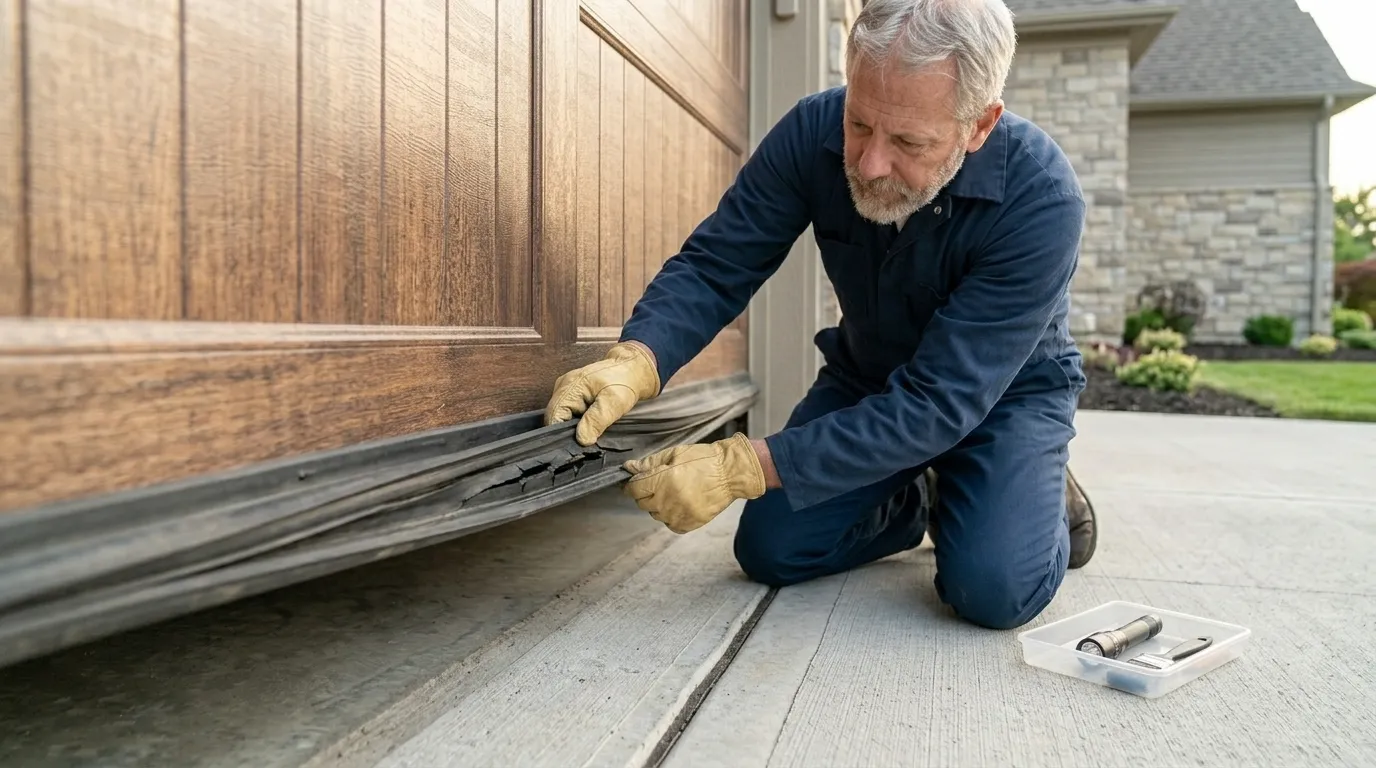
Clawson sits in a severe-cold climate band, and that shows up in the noise calendar more than in any single dramatic event. Late fall is when lubricant that's gone stiff over a hot summer starts squealing on the rollers and hinges - the grease thickens as temperatures drop and stops doing its job. Deep winter is spring-failure season: steel contracts in the cold, torsion springs lose a little flexibility, and a spring that was already near the end of its life often lets go on the coldest morning of the year, not gradually.
Early spring brings a different sound - a wet, sticking scrape as moisture that worked into wood jambs and steel tracks over winter finally starts to release, sometimes warping a track just enough to cause a rub with every cycle. ' If you're hearing something new only in winter and it goes away by June, don't assume it fixed itself - it usually didn't.
What the Weather Here Does to It
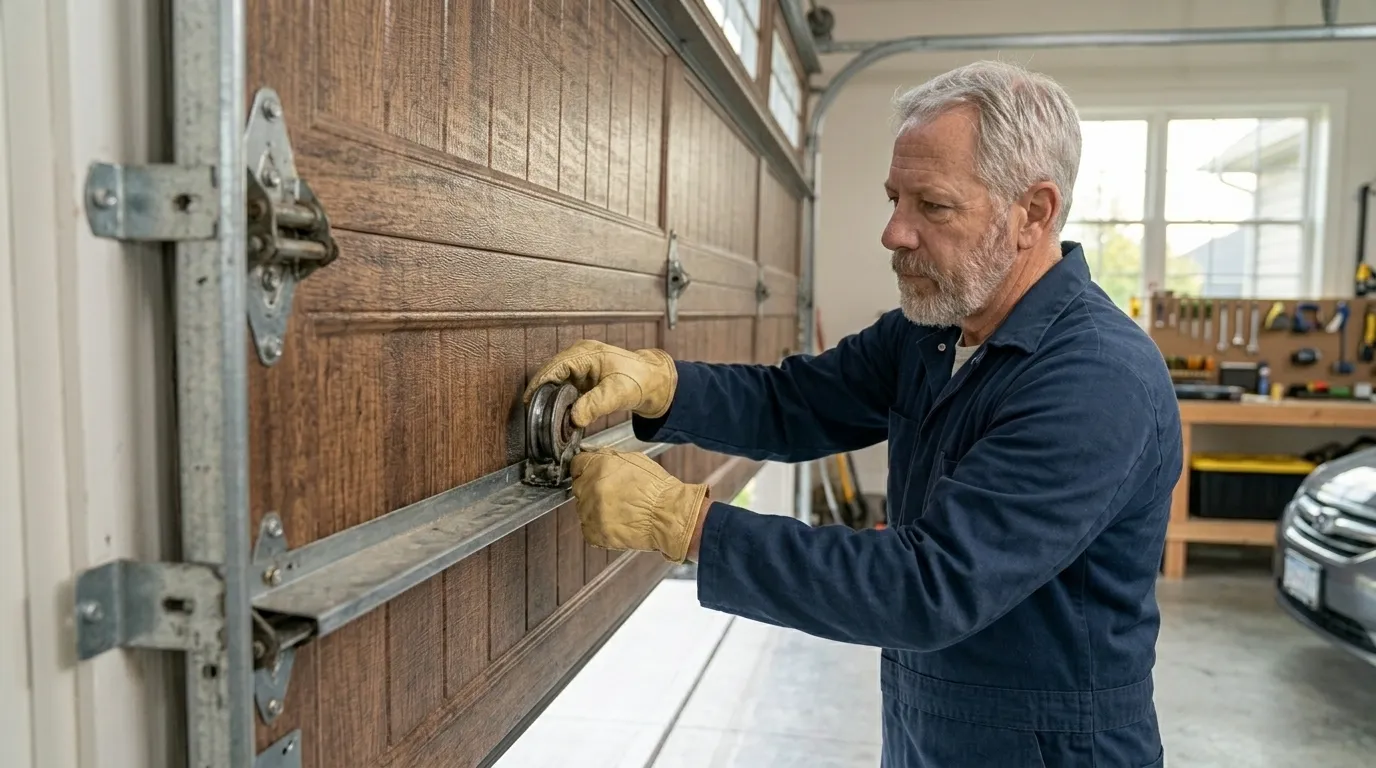
The severe-cold rating on this area isn't a marketing term, it's a mechanical fact for steel doors and torsion springs. Steel contracts as it gets cold, which tightens tolerances that were set for warmer weather - a track that ran true in August can develop a slight rub in January simply from the metal shrinking around its mounting brackets. Torsion springs lose a measurable amount of their flex in deep cold, which is part of why so many spring failures cluster in the coldest weeks rather than spreading evenly across the year.
Lubricant behaves differently too - anything not rated for cold gets thick and stops protecting rollers and hinges right when the metal-on-metal friction is highest. None of this means a door is failing. It means the same parts that ran silent in summer are working under different stress in winter, and a noise that shows up only in cold weather is the hardware telling you it's near its limit, not that it's broken yet.
Where People Go Wrong
The most common mistake is spraying a household oil or WD-40 on a noisy roller and calling it fixed. That quiets things for a week or two, then the noise comes back louder, because the underlying wear on the roller or the sagging spring tension was never addressed. The second mistake is waiting through a full winter on a spring that's already making noise, since a spring under tension in cold steel doesn't fail gently - it usually goes all at once, and often takes a cable or bracket with it.
We'll say plainly where our own limits are: on some of the oldest doors in this area, original hardware is no longer made, and a repair on a door from the 1958 era sometimes costs more in parts sourcing than replacing the door outright - we'll tell you which situation you're in before we start work, not after. One thing we don't do is guess over the phone. A noise description gets us close, but on a house this age there's often more than one worn part contributing to the same sound.
How We Can Help
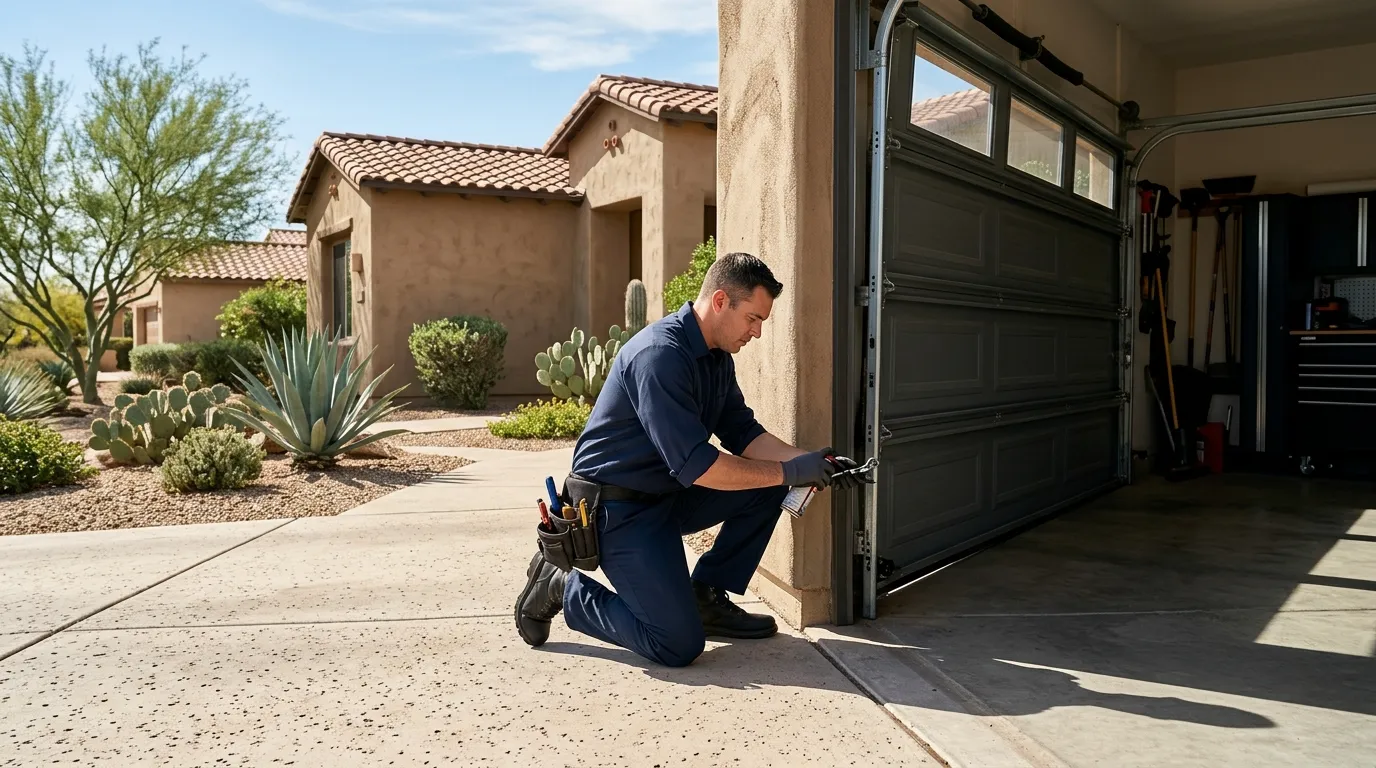
Garage Door Repair
Springs, cables, tracks, rollers, and openers fixed by a tech who explains the problem before touching anything.
Learn more →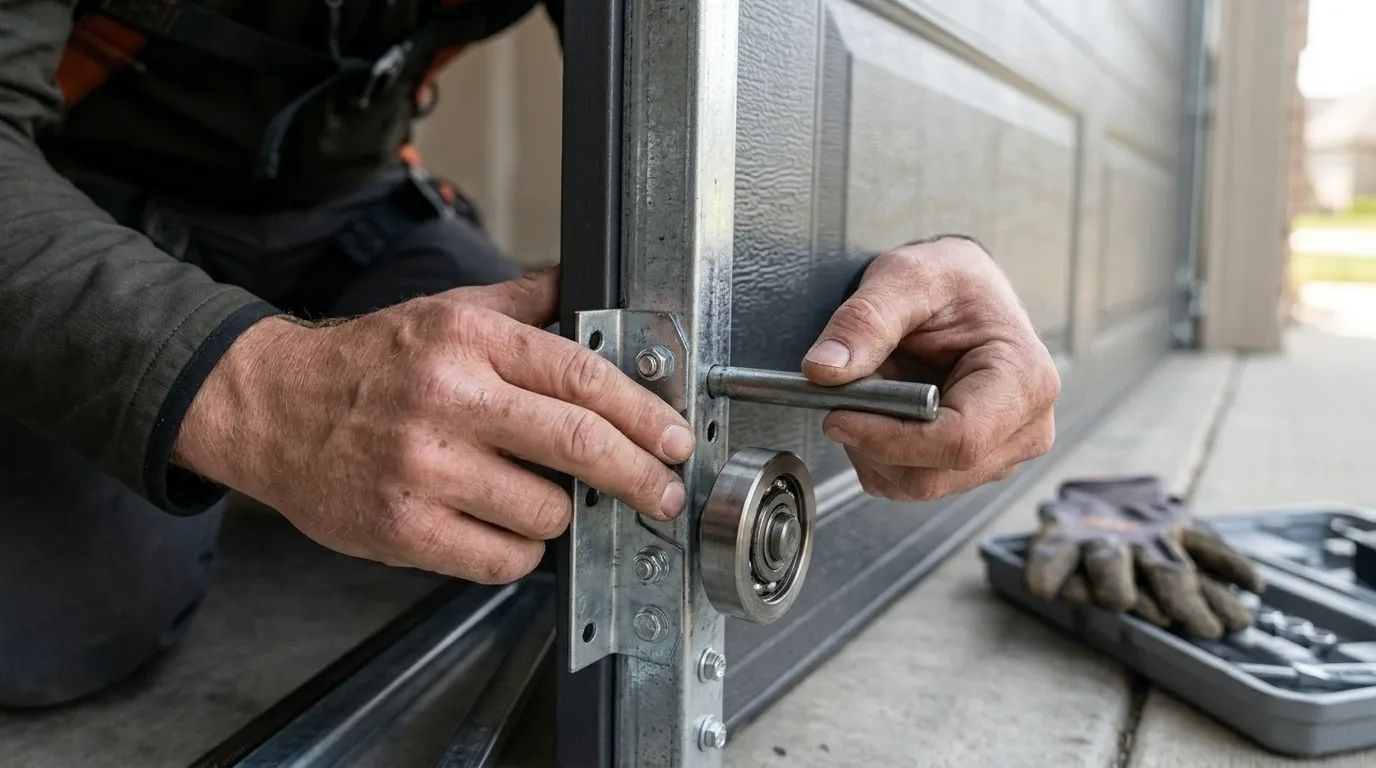
Garage Door Installation
New sectional doors sized and installed for the housing stock actually built in this area.
Learn more →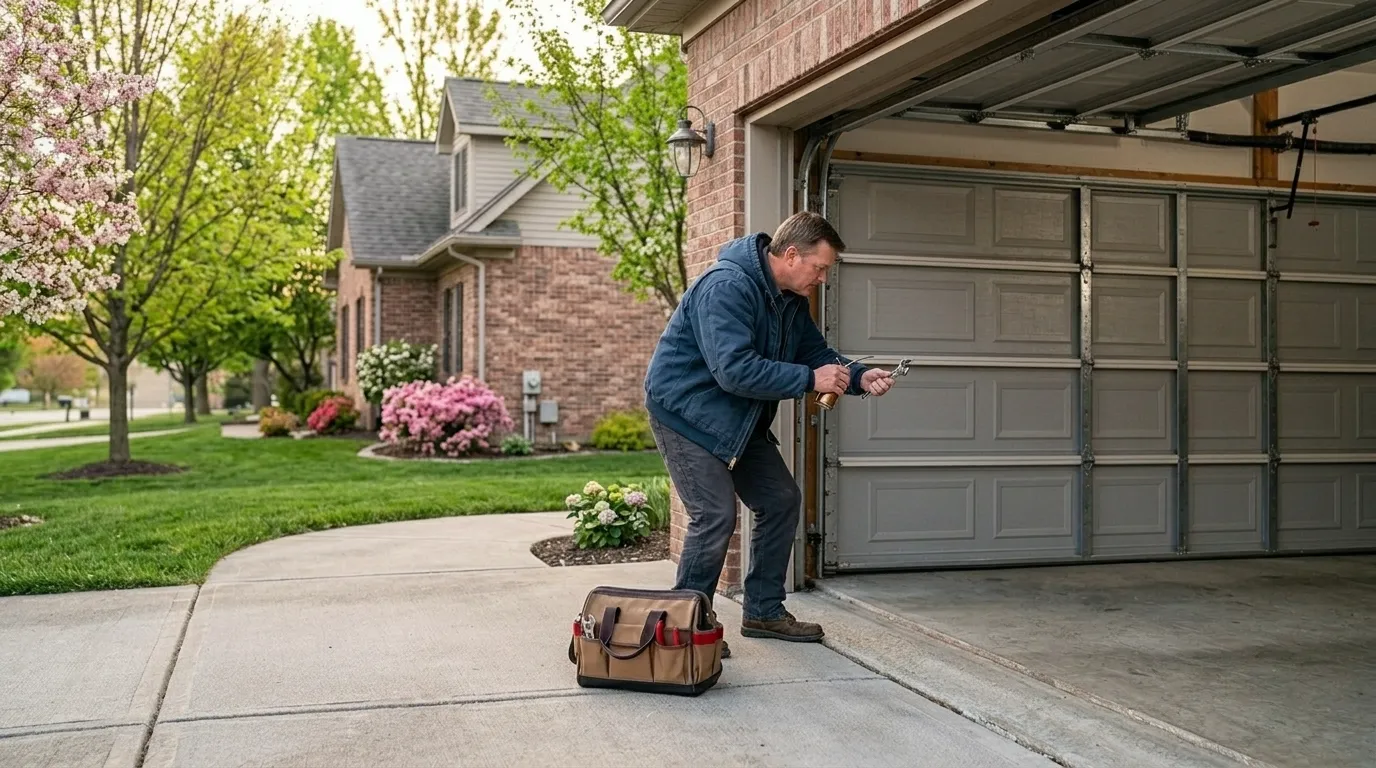
Garage Door Service
Tune-ups, lubrication, and safety checks that catch a small problem before it becomes a service call.
Learn more →Frequently Asked Questions
My garage door only makes noise in winter - is that normal?
It's common in Clawson. Cold makes steel contract and stiffens lubricant, so a track or roller that runs quiet in summer can rub or squeal once temperatures drop. If it's the same noise every winter and quiet by spring, it's worth having it checked before it becomes a full failure rather than assuming it self-resolves.
How do I know if it's the spring or the rollers?
A loud bang right as the door starts to move is almost always a spring. A steady grinding or squeaking throughout the whole travel of the door usually points to rollers or hinges. Springs are also under high tension and not something to inspect closely yourself.
Is my door too old to repair?
Depends on the part and the door. Given how much of Clawson's housing dates to the 1938-1984 range, we run into original hardware often, and sometimes parts for it are hard to source. We'll tell you upfront if replacement makes more sense than chasing parts for an old door.
Can I just keep lubricating it myself?
You can maintain rollers and hinges yourself with the right lubricant, and that helps. But lubricant won't fix a worn roller, a bent track, or a spring nearing the end of its cycle life - it just delays the noise from telling you something's actually wrong.
Have a Door That Needs a Second Opinion?
Call and describe what it is doing - we will tell you what it likely is.