
Clawson Garage Door Guide
The Real Reason Garage Doors Slip Off Track in Clawson
Clawson homes built between 1938 and 1984 have garage door hardware that wasn't made for Michigan's cold, severe winters. Here's why doors slip off track.
- Licensed & Insured
- Same-Area Service Calls
- Upfront Pricing
What Is Going On
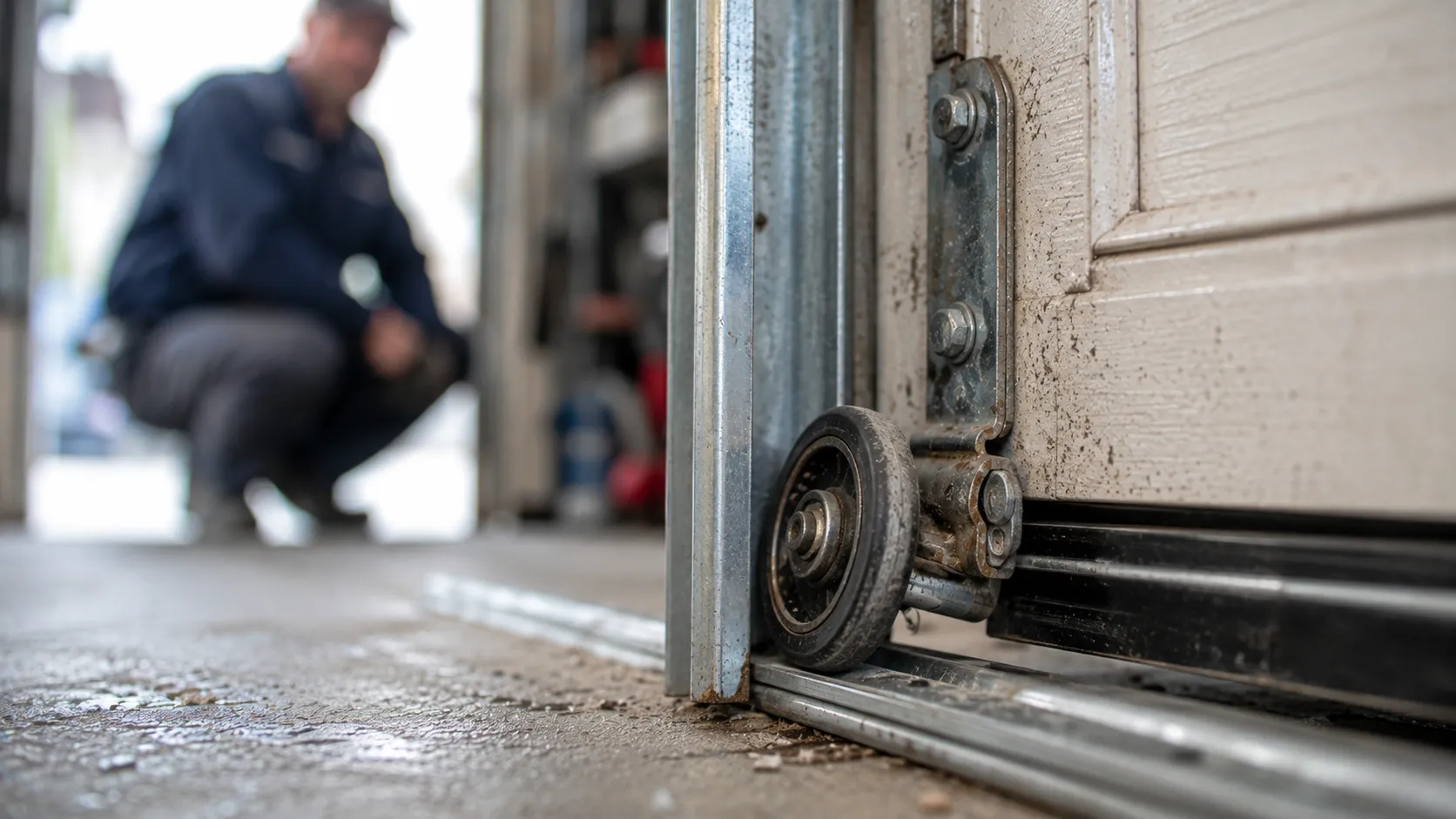
When a door goes off track, the rollers have jumped the rail, or the rail itself has pulled away from the framing it's screwed to. On a lot of Clawson doors that's not a one-time accident, it's a slow failure of hardware that's been in the wall since before anyone reading this owned the house. Housing in this area was built mostly between 1938 and 1984, with a median build year of 1958, and most of that stock predates 1960.
Track brackets from that era were fastened into wood framing with lag screws sized for the loads of the day, usually a lighter single-layer door, not the heavier insulated panel doors many owners have swapped in since. Add a few decades of seasonal wood movement and those screws back out a sixteenth of an inch at a time. You don't notice until the day the door binds, jumps the rail on one side, and the whole panel racks in the opening.
The fix isn't always a new door. Sometimes it's re-anchoring the track to solid framing, sometimes the track itself is bent enough that it has to come off. Either way, the age of the house tells you more about why this happened than anything the door itself did wrong.
Season by Season
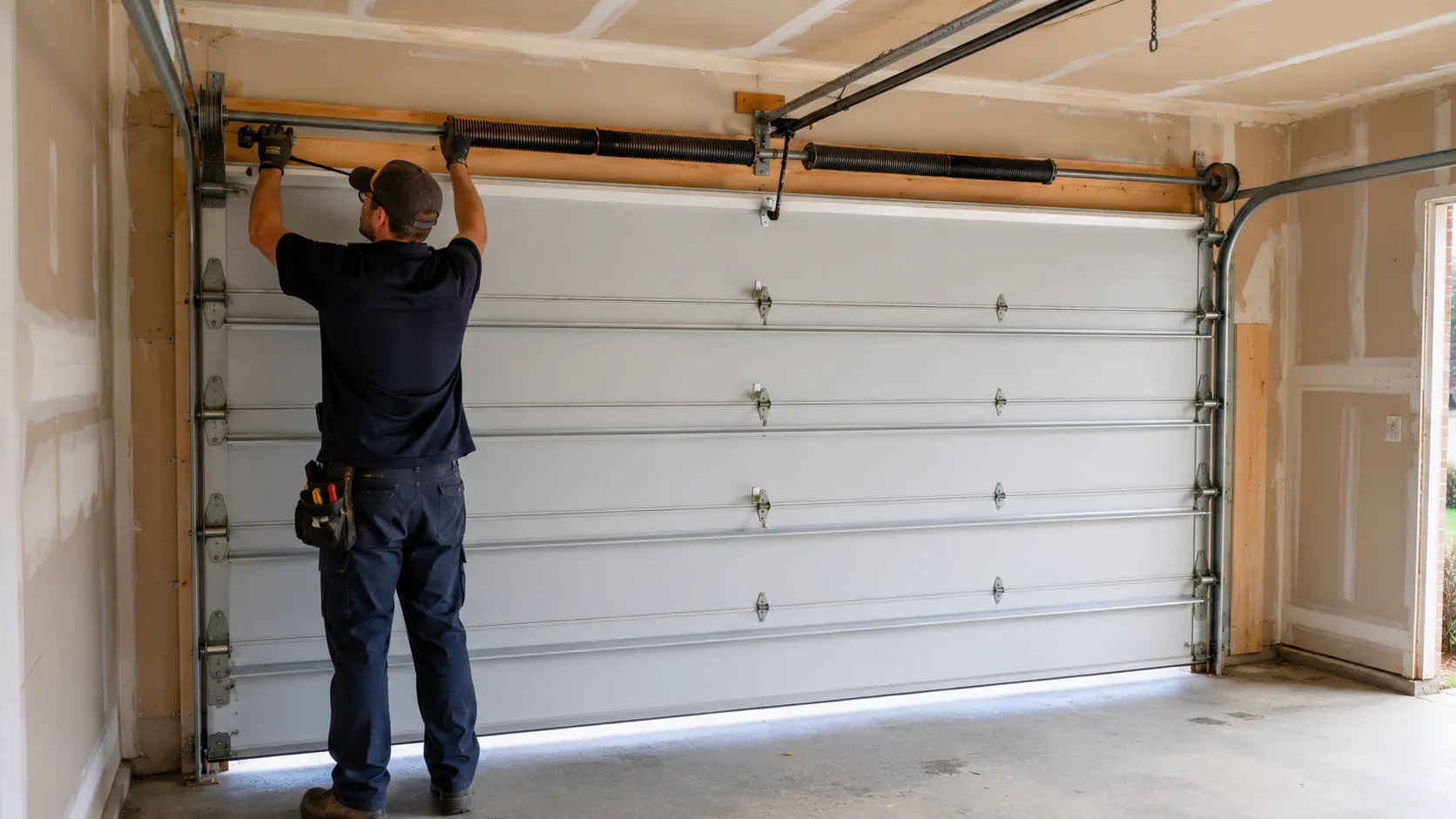
Spring in this climate band brings the frost heave that shifted your slab a hair over the winter, and a track bolted to a frame that moved even slightly no longer lines up the way it did in October. Summer humidity swells wood jambs in the older homes built before 1960, tightening clearance around the door and pinching rollers that were already running a little wide. Fall is usually quiet, which is exactly why people skip a look at the hardware before winter hits.
Winter is where it shows up. Clawson sits in a cold-severe climate band, and the repeated freeze-thaw cycling that comes with it works steel brackets loose the same way it works at asphalt and concrete. A door that was riding fine in September can be grinding against a bent rail by February, because the temperature swing that moved the track happened gradually over three or four cold fronts, not all at once.
None of this is dramatic. It's cumulative. A house built in 1958 has been through roughly seventy of these cycles, and every one of them nudged something a fraction of a degree out of true.
That's the pattern worth watching for, not a single storm or a single cold night.
What the Weather Here Does to It
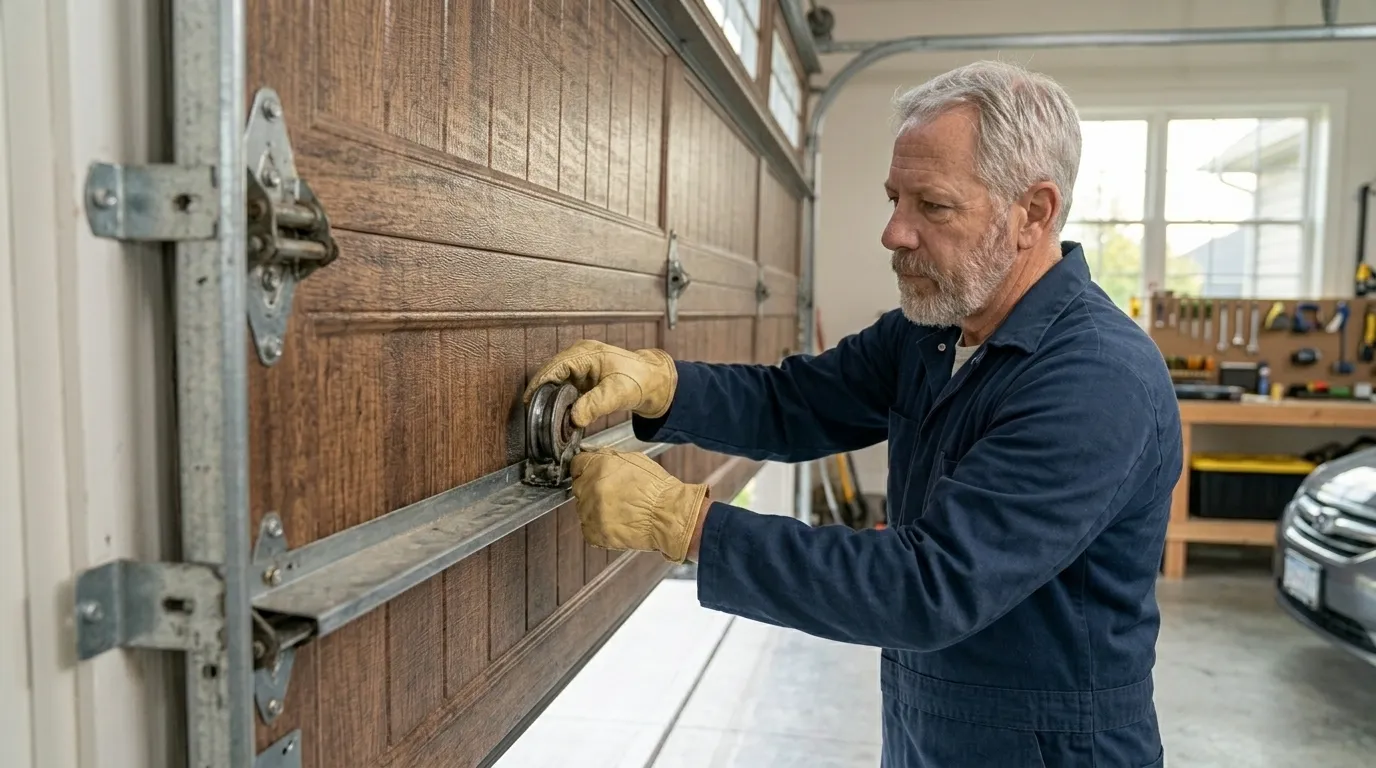
Cold-severe winters don't just make steel brittle, they make it move. Track rail contracts in deep cold and expands again once the garage warms up, and on an attached garage that swing happens every single day the temperature crosses freezing. Over a house built in the 1950s or 60s, that daily flex has decades to work screws loose in framing that's already dried and shrunk from age.
It also stiffens the lubricant in old rollers and bearings, so the door drags on one side before it drags on the other, and an uneven drag is what pulls a door off a rail faster than almost anything else. Homes from this era often still run galvanized track rather than the heavier reinforced rail used in newer construction, and galvanized steel that's flexed through seventy winters shows metal fatigue you can sometimes see as a faint wave down the rail length. That wave is enough to knock a roller loose on a cold morning when the steel is at its stiffest and least forgiving.
None of this is unique to any one door, it's a function of steel, cold, and time, and this area has all three in the specific combination that ages hardware faster than it looks like it should.
Where People Go Wrong
The most common mistake is bending the rail back into shape by hand or with a pry bar. It looks fixed, the door runs for a few weeks, and then it comes off again because the metal was stressed at that bend point and never fully recovered. The second mistake is treating a track problem as a spring problem, tightening or replacing the spring and never checking whether the rail itself is still square to the opening.
The third is assuming a house this old still has the same track profile as a current one. It often doesn't, and finding a matching bracket for some of the original hardware from the 1940s and 50s can take longer than the repair itself. That's a real limitation, not every original part on a house from this era is still stocked anywhere, and sometimes the honest answer is to replace the track and hardware as a set rather than chase down a piece that matches.
Across the roughly 35,443 owner-occupied houses in this area, most owners can absorb that kind of full-hardware replacement rather than keep patching around a mismatch, given the median household income here. That's usually the better long-term call once a rail has come off more than once.
How We Can Help
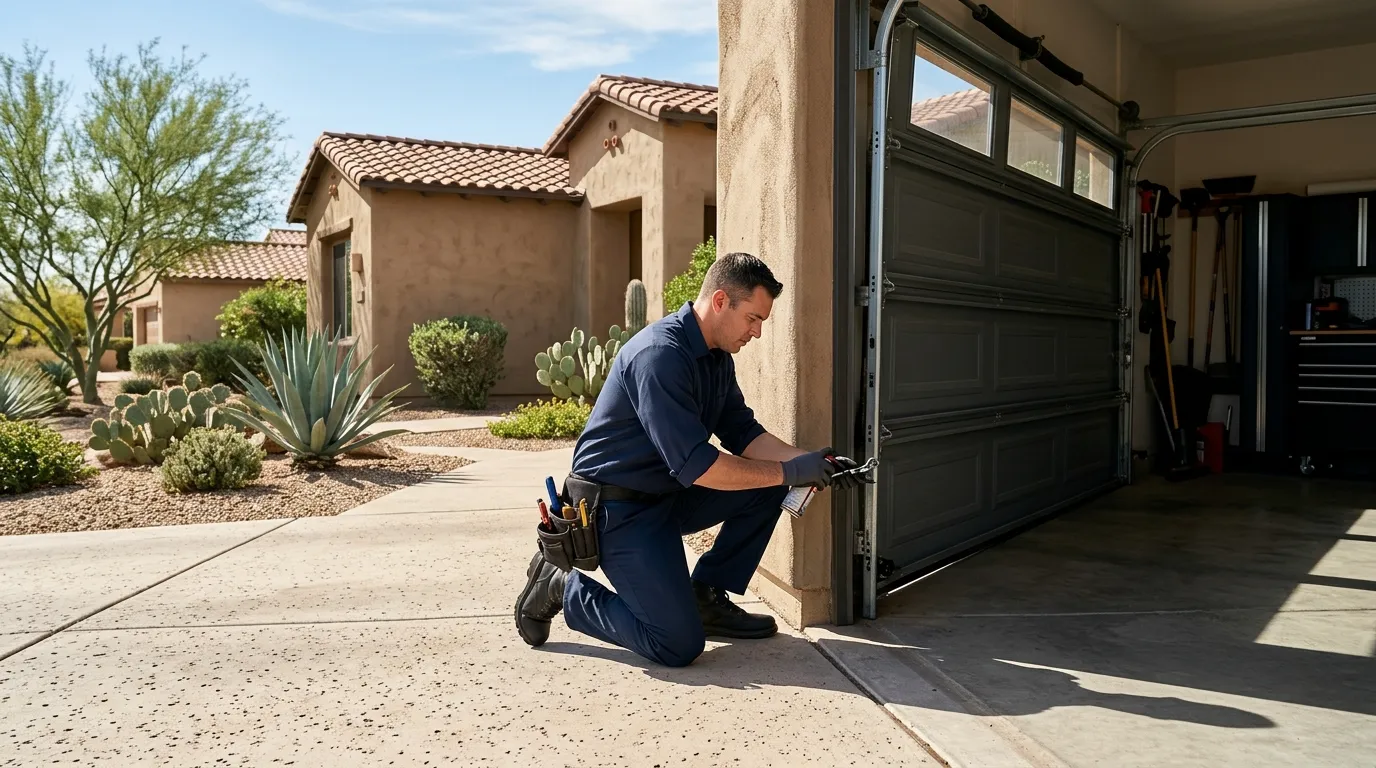
Garage Door Repair
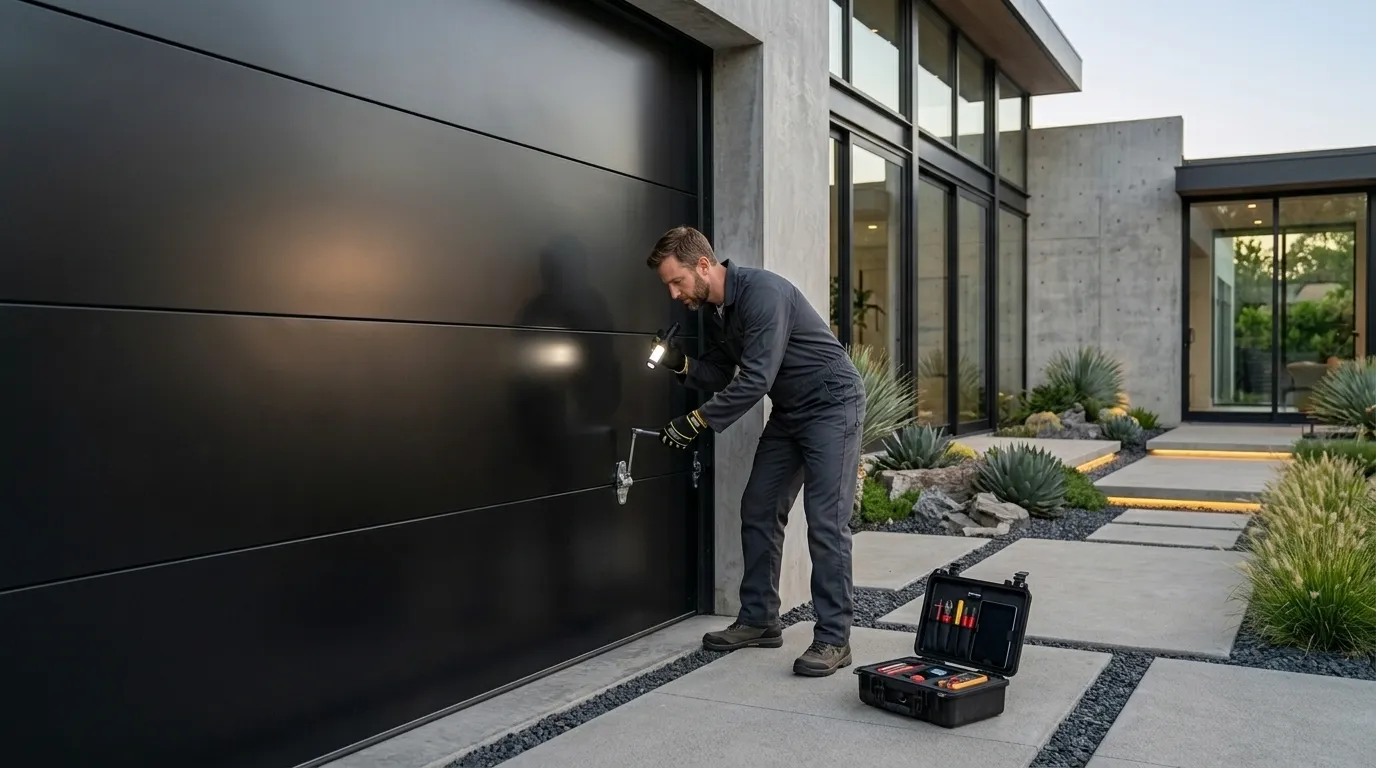
Springs, cables, tracks, rollers, and openers fixed by a tech who explains the problem before touching anything.
Learn more →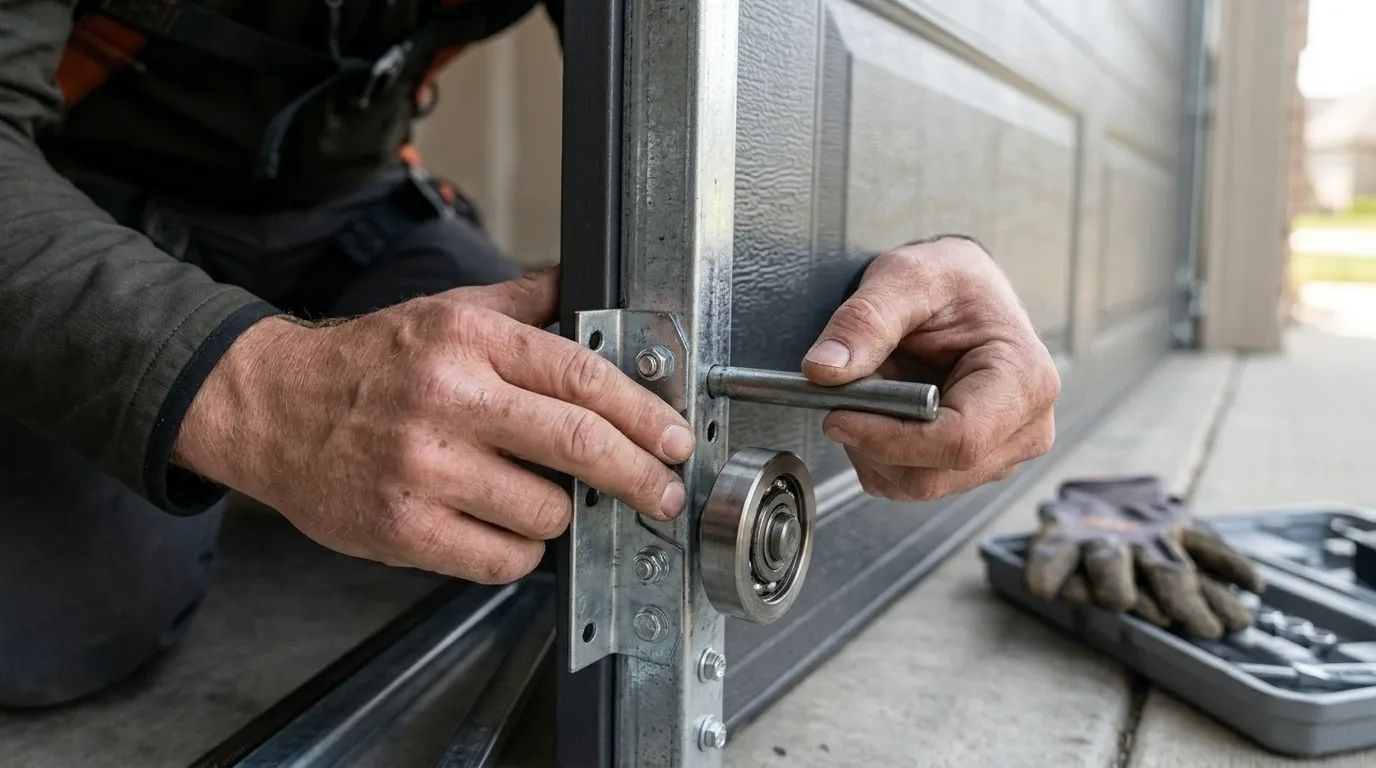
Garage Door Installation
New sectional doors sized and installed for the housing stock actually built in this area.
Learn more →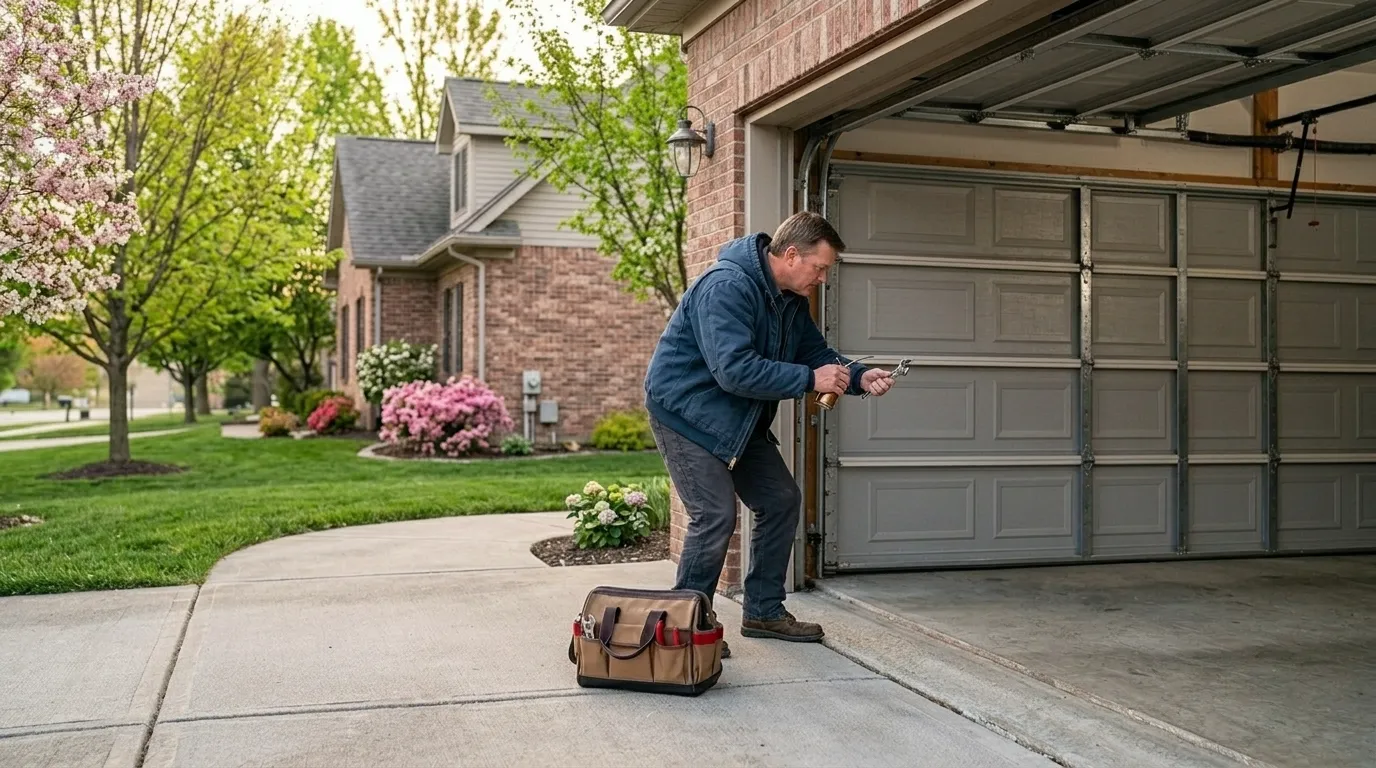
Garage Door Service
Tune-ups, lubrication, and safety checks that catch a small problem before it becomes a service call.
Learn more →Frequently Asked Questions
Why does my garage door only go off track in winter?
Cold makes steel track contract and stiffens old roller bearings, and on a house built before 1960 the brackets holding that track were fastened into wood that's already shrunk with age. The combination of a stiffer door and looser hardware is what tends to surface in the cold months, even though the underlying wear happened all year.
Can I just bend the track back myself?
You can, and it will often run again for a while, but a rail that's been bent once has a stress point that fails again sooner than the rest of the track. If it's come off more than once, the rail is usually the problem, not just alignment, and it's worth replacing rather than reshaping.
Is this specific to older Clawson homes, or does it happen everywhere?
Track wear happens on any door eventually, but it shows up earlier here because most of the housing stock was built between 1938 and 1984 with hardware sized for lighter doors and fastened into framing that's had decades to move. That combination, not just age alone, is what drives it.
Have a Door That Needs a Second Opinion?
Call and describe what it is doing - we will tell you what it likely is.